
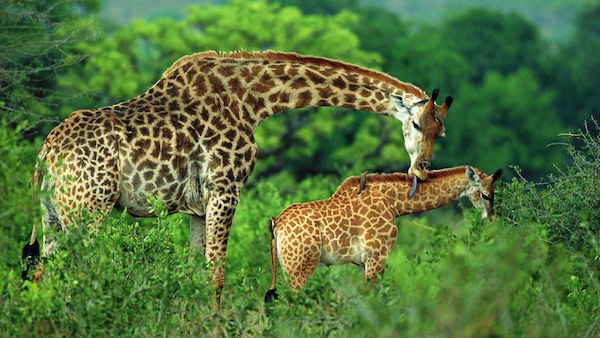
GIRAFFE
The giraffe's chief distinguishing characteristics are its extremely long neck and legs, its horn-like ossicones, and its distinctive coat patterns. It is classified under the family Giraffidae, along with its closest extant relative, the okapi. Its scattered range extends from Chad in the north to South Africa in the south, and from Niger in the west to Somalia in the east. Giraffe are predominantly browsers and mainly eat leaves and buds on trees and shrubs. They will also eat herbs, climbers and vines, and prefer flowers and fruit when in season. The proportion of grass in their diet is very low. Vachellia or Senegalia (formerly Acacia) leaves and shoots form the bulk of a giraffe’s diet in most areas.
Giraffes live in herds of related females and their offspring, or bachelor herds of unrelated adult males, but are gregarious and may gather in large aggregations. Males establish social hierarchies through "necking", which are combat bouts where the neck is used as a weapon. Dominant males gain mating access to females, which bear the sole responsibility for raising the young.Female giraffes give birth standing up. Their young endure a rather rude welcome into the world by falling more than 5 feet to the ground at birth. These infants can stand in half an hour and run with their mothers an incredible ten hours after birth.
Giraffes use their height to good advantage and browse on leaves and buds in treetops that few other animals can reach (acacias are a favorite). Even the giraffe's tongue is long! The 21-inch tongue helps them pluck tasty morsels from branches. Giraffes eat most of the time and, like cows, regurgitate food and chew it as cud. A giraffe eats hundreds of pounds of leaves each week and must travel miles to find enough food.T he giraffe's height also helps it to keep a sharp lookout for predators across the wide expanse of the African savanna. The giraffe's stature can be a disadvantage as well—it is difficult and dangerous for a giraffe to drink at a water hole. To do so they must spread their legs and bend down in an awkward position that makes them vulnerable to predators like Africa's big cats. Giraffes only need to drink once every several days; they get most of their water from the luscious plants they eat.
WHERE WILL YOU FIND THEM
You will find the Giraffe at pen G15, Just beyond the research centre.